
This guide provides a detailed comparison of three primary equipment categories for measuring caravan weight: mechanical towball gauges, portable axle scale pads, and integrated wireless sensors. Off-grid caravan users need accurate weight distribution data to ensure safety, stability, and compliance with legal limits. Understanding the nuances of each system helps caravanners make informed decisions for verifying payload, axle loads, and nose weight in various scenarios, from pre-trip preparation to on-site adjustments.
Equipment Categories and Measurement Methodology
Each equipment type employs a distinct methodology to measure caravan weight parameters. These differences impact accuracy, ease of use, and the specific metrics provided.
Mechanical Towball Gauges
Mechanical towball gauges, often referred to as nose weight scales, are simple, self-contained devices. They typically use a spring or hydraulic mechanism to measure the downward force exerted by the caravan coupling onto the tow vehicle’s towball. The caravan’s jockey wheel is raised, and the gauge is placed directly under the coupling. The weight reading is then taken from a calibrated scale, usually in kilograms or pounds.
- Principle: Measures static vertical force directly at the coupling point.
- Metrics: Provides only the static nose weight.
- Power Source: None; purely mechanical.
Portable Axle Scale Pads
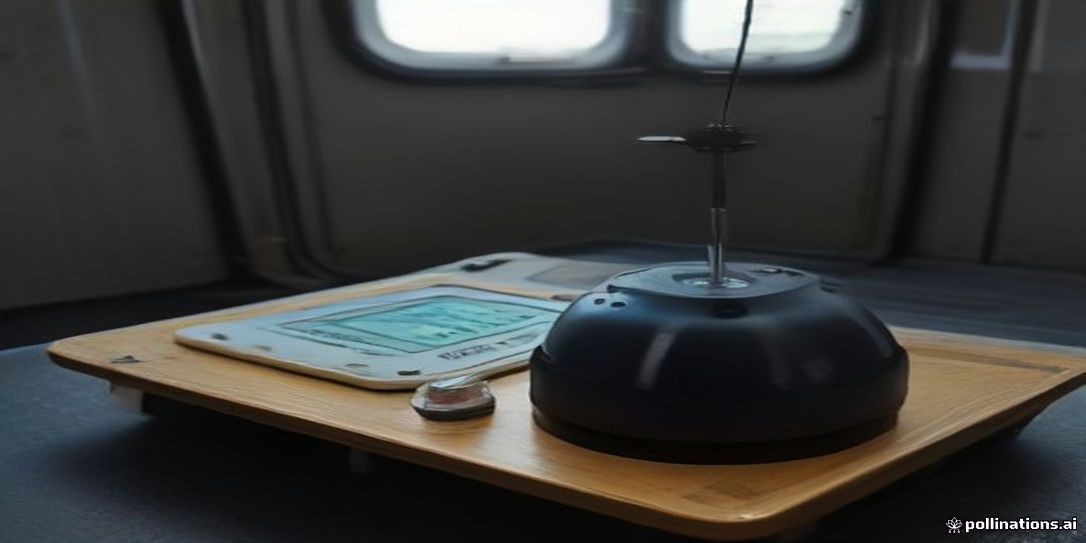
Portable axle scale pads are electronic devices that use strain gauges to measure the weight exerted by individual wheels or axles. These systems typically consist of one or more flat pads placed under the caravan’s wheels. The caravan is slowly driven onto the pads, or the pads are positioned under stationary wheels, and the weight applied to each pad is digitally displayed. Some systems can sum individual wheel weights to calculate total axle loads and, in combination with nose weight, the overall caravan payload.
- Principle: Employs strain gauges to detect deformation under load, converting it into an electrical signal proportional to weight.
- Metrics: Measures individual wheel loads, axle loads, and can calculate total payload when combined with nose weight.
- Power Source: Typically AAA or Lithium batteries.
Integrated Wireless Sensors
Integrated wireless sensors represent a more advanced approach, often incorporating strain gauges directly into the caravan’s coupling or suspension components. These systems provide real-time, dynamic measurements that can be transmitted wirelessly to a smartphone app or a dedicated display unit in the tow vehicle. Beyond static weight, some advanced systems can monitor dynamic load changes during towing, offering insights into stability and payload distribution adjustments while on the move.
- Principle: Strain gauges embedded in critical structural points (e.g., coupling pin, suspension components) continuously monitor load, transmitting data wirelessly.
- Metrics: Provides dynamic nose weight, and in some comprehensive systems, real-time payload and axle load telemetry.
- Power Source: Often integrated with the caravan’s 12V electrical system or powered by internal coin cell batteries.
Measurement Accuracy and Tolerance Comparison
Accuracy is a critical factor when choosing weight measurement equipment, as precise data is essential for safety and compliance. The environment and methodology can significantly influence the reliability of readings.
| Equipment Type | Measured Metric | Accuracy Margin | Max Capacity (kg) | Power Source |
|---|---|---|---|---|
| Mechanical Towball Gauge | Static Nose Weight Only | ±5% to ±10% | 350 | None (Mechanical) |
| Portable Wheel Pad Scales | Individual Wheel, Axle Load & Calculated Total Payload | ±1% to ±2% | 1000 (per pad) | AAA / Lithium Battery |
| Wireless Onboard Sensors | Dynamic Nose Weight & Real-time Towing Telemetry | ±1.5% | 3500 | 12V Vehicle / Internal Coin Cell |
Data from Canonical Numeric Data Contract.
Static vs. Dynamic Load Deviations
Mechanical towball gauges provide static measurements, meaning the caravan must be stationary and level for an accurate reading. Any slight tilt or uneven ground can introduce errors. Portable axle scale pads also primarily provide static measurements, although some allow for slow drive-over readings. The accuracy of pad scales can be affected by factors like ground slope, surface hardness, and whether the wheel is perfectly centered on the pad. Deviations of 5% to 10% can occur on uneven or soft ground, whereas on a level, hard surface, they achieve their stated accuracy of ±1% to ±2%.
Integrated wireless sensors offer the advantage of dynamic measurements. They can provide real-time feedback even when the caravan is in motion, allowing for continuous monitoring of nose weight and, in some cases, overall load distribution. This dynamic capability accounts for shifts in load during travel, offering a more comprehensive understanding of stability. Their typical accuracy margin is around ±1.5%.
Impact of Environmental Factors on Accuracy
For portable scales, the environment plays a crucial role. A sloped surface can redistribute weight, leading to inaccurate readings. For example, if a caravan is weighed on a slope, the wheels on the lower side will register higher loads than they would on level ground, and vice versa. Similarly, soft ground can cause the pads to sink unevenly, affecting the load distribution and leading to skewed results. Manufacturers typically specify that these scales should be used on firm, level ground for optimal accuracy.
Caravan Load Distribution and Lateral Imbalance Detection
Effective load management involves more than just nose weight. The distribution of weight across the axles and from side to side is critical for stability and safety.
Beyond Nose Weight: Lateral Imbalance
While a mechanical towball gauge accurately measures the nose weight, it provides no information about how the payload is distributed across the caravan’s axles or from left to right. A caravan can have the correct nose weight but still be dangerously imbalanced if, for example, heavy items are stored predominantly on one side. This lateral imbalance can lead to unpredictable handling, tire wear, and increased risk of sway, especially at speed.
Portable axle scale pads excel in detecting these critical imbalances. By measuring each wheel individually, they reveal discrepancies between the left and right sides of the caravan. This allows users to adjust the placement of cargo to achieve a more even distribution, enhancing stability.
Axle Load Simulation Example
Consider a caravan with the following specifications from our canonical data:
- ATM (Aggregate Trailer Mass) Rating: 3500 kg
- Tare Weight: 2700 kg
- Maximum Payload: 800 kg
- Target Nose Weight: 300 kg
- Max Axle Group Load: 3200 kg
Let’s simulate a scenario where the caravan is loaded for an off-grid trip.
Scenario: A caravanner loads 800 kg of payload.
- Assumptions: For this example, we assume a dual-axle caravan with four wheels. The nose weight is independently verified to be 300 kg using a mechanical towball gauge. The remaining payload is distributed over the axles.
Step 1: Calculate Total Weight on Axles Total Weight = Tare Weight + Payload - Nose Weight Total Weight = 2700 kg + 800 kg - 300 kg = 3200 kg
Step 2: Verify Axle Group Limit The calculated total weight on axles (3200 kg) must not exceed the Max Axle Group Load (3200 kg). In this case, it is exactly at the limit. This indicates a fully loaded scenario where careful distribution is paramount.
Step 3: Using Portable Axle Scale Pads to Check Distribution After loading, the caravanner uses portable axle scale pads to measure each wheel’s load.
Let’s assume the following readings from the portable pads:
- Front-Left Wheel: 850 kg
- Front-Right Wheel: 750 kg
- Rear-Left Wheel: 800 kg
- Rear-Right Wheel: 800 kg
Step 4: Calculate Individual Axle Loads
- Front Axle Load = Front-Left Wheel + Front-Right Wheel Front Axle Load = 850 kg + 750 kg = 1600 kg
- Rear Axle Load = Rear-Left Wheel + Rear-Right Wheel Rear Axle Load = 800 kg + 800 kg = 1600 kg
Step 5: Calculate Total Axle Load (Verification) Total Axle Load = Front Axle Load + Rear Axle Load Total Axle Load = 1600 kg + 1600 kg = 3200 kg This matches our calculated total weight on axles from Step 1, confirming the accuracy of the pad readings.
Step 6: Check for Lateral Imbalance
- Left Side Total = Front-Left Wheel + Rear-Left Wheel Left Side Total = 850 kg + 800 kg = 1650 kg
- Right Side Total = Front-Right Wheel + Rear-Right Wheel Right Side Total = 750 kg + 800 kg = 1550 kg
Analysis: There is a 100 kg difference (1650 kg vs. 1550 kg) between the left and right sides of the caravan. This indicates a significant lateral imbalance. Even though the total axle load is within limits, this imbalance could negatively affect handling and tire wear. The caravanner should redistribute some cargo from the left side to the right side to achieve a more even balance, aiming for closer to 1600 kg per side. For further guidance on optimizing your setup, you might find our Caravan Payload, Axle Load, & Nose Weight Calculator: Optimize Stability & Safety helpful.
Decision Candidate Selection Matrix and Public Weighbridge Calibration
Choosing the right equipment depends on individual needs, budget, and the level of detail required for weight management. For a comprehensive approach to managing your caravan’s weight, exploring a Complete Caravan Payload, Axle Load, and Nose Weight Management System Design for Optimal Stability & Safety can provide further insights.
Decision Matrix
| Feature / Consideration | Mechanical Towball Gauge | Portable Axle Scale Pads | Integrated Wireless Sensors |
|---|---|---|---|
| Cost | Low | Medium | High |
| Accuracy | Moderate (±5-10%) | High (±1-2%) | High (±1.5%) |
| Measurements Provided | Static Nose Weight | Individual Wheel, Axle, Calculated Total Payload | Dynamic Nose Weight, Real-time Telemetry |
| Ease of Use (Setup) | Very Easy | Moderate (requires careful positioning) | Moderate (initial installation) |
| Ease of Use (Readings) | Easy (direct visual) | Easy (digital display) | Easy (app/display) |
| Lateral Imbalance Detection | No | Yes | Potentially (depending on system) |
| Real-time Monitoring | No | No | Yes |
| Off-grid Suitability | Excellent (no power) | Excellent (battery powered) | Good (if self-powered or 12V) |
| Pre-trip Setup | Good (nose weight) | Excellent (full distribution) | Good (nose weight, some systems) |
| On-road Monitoring | No | No | Excellent |
Cross-Verification with Public Weighbridges
Regardless of the equipment chosen, it is highly recommended to cross-verify your measurements with a certified public weighbridge, especially before major off-grid trips. Public weighbridges offer the highest level of accuracy and provide legally binding weight certificates. This step is crucial for establishing a baseline and calibrating your portable equipment.
Safety Protocol for Off-Grid Travel:
- Initial Weighbridge Visit: Before your first major trip, load your caravan with all typical gear, water, and supplies. Take it to a public weighbridge to get an official reading of your total ATM, individual axle weights, and ensure you are within all legal limits. Document these readings.
- Portable Scale Calibration: Use your portable axle scale pads immediately after the weighbridge visit to compare their readings with the official weighbridge data. Note any discrepancies and understand the typical variance of your portable scales. This helps you interpret future readings more accurately.
- On-site Adjustments: When off-grid, use your portable scales to verify changes in payload (e.g., after refilling water tanks, adding provisions, or shifting heavy gear). Aim to maintain the load distribution observed during your calibrated weighbridge visit.
- Regular Checks: Conduct regular checks with your portable equipment, especially after significant changes in loading or before long journeys.
Choosing the Right System
- For basic nose weight checks and budget-conscious users: A mechanical towball gauge is sufficient. It’s simple, robust, and requires no power, making it ideal for off-grid use.
- For comprehensive payload and axle load management, including lateral balance, especially for off-grid preparation: Portable axle scale pads are the best choice. They offer high accuracy and detailed insights into weight distribution, which is crucial for safety and tire longevity. These are particularly valuable for initial setup and adjustments before heading out. For more details on choosing such systems, refer to our guide on Choosing Portable Caravan Weighing Systems: Static vs. Dynamic Axle Load, Nose Weight Scales, and Weighbridge Alternatives.
- For real-time dynamic monitoring and maximum convenience during towing: Integrated wireless sensors are superior, though they represent a higher investment. These systems provide continuous feedback, allowing drivers to react to changes in load and stability as they occur.
It’s important to remember that legal weighbridge approval processes vary by region. Always adhere to local regulations and manufacturer load limits. For a deeper dive into optimizing your caravan’s performance, feel free to browse our engineering calculators and the broader Explore Caravan Systems section.
Sources and Assumptions
- All numeric data regarding caravan specifications and equipment comparison (e.g., ATM rating, tare weight, accuracy margins, max capacities) are taken directly from the provided canonical numeric data contract.
- The example scenario for axle load simulation assumes a dual-axle caravan for illustrative purposes.
- Accuracy margins for portable scales on uneven ground (5-10%) are illustrative of potential real-world deviations and not part of the canonical data’s stated ideal accuracy.
- Specific features of “integrated wireless sensors” (e.g., real-time telemetry beyond just nose weight) are based on general market offerings for advanced systems and may vary by manufacturer and model. Users should consult specific product datasheets.